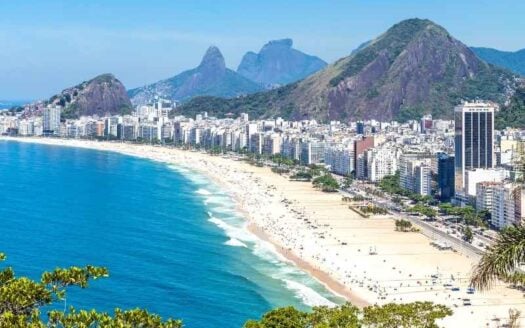









夏奇拉科帕卡巴纳演唱会前,里约热内卢的 Airbnb 需求激增

Airbnb demand in 里约热内卢 is rising sharply as the city prepares for a new wave of international visitors. The upcoming concert by Shakira, scheduled for May 2 in 科帕卡巴纳, is already driving increased interest in short-term rentals across the city. As a result, travelers are turning to flexible accommodation options, especially in high-demand coastal neighborhoods.
Airbnb demand in Rio increases ahead of major events
In the weeks leading up to the event, demand for short-term rentals has accelerated significantly. According to recent data, thousands of international visitors have already booked flights to attend the concert. Consequently, the pressure on accommodation is rising, particularly in central and beachfront areas.
This surge highlights a recurring pattern. Whenever major events take place, Airbnb demand in Rio tends to increase rapidly. Unlike traditional hotels, short-term rentals offer more flexibility, which makes them especially attractive during peak periods.
How short-term rentals support Rio de Janeiro’s capacity
As visitor numbers grow, short-term rentals play an essential role in expanding the city’s hosting capacity. Instead of relying solely on hotels, Rio de Janeiro benefits from a decentralized accommodation network spread across multiple neighborhoods.
This model allows the city to absorb demand spikes more efficiently. In addition, it provides travelers with a wider range of options, from compact apartments to high-end properties with ocean views.
At the same time, Airbnb demand in Rio reflects broader tourism trends. Large-scale events continue to reshape how visitors choose where to stay, favoring more local and immersive experiences.
Airbnb demand in Rio and its impact on local neighborhoods
Beyond tourism, this growth has a direct impact on local communities. Many hosts use short-term rental income as a complement to their primary earnings. In fact, a significant share of hosts are not full-time professionals, which reinforces the idea of a distributed and community-driven model.
Moreover, the economic effects extend beyond the properties themselves. Cleaning services, maintenance professionals and local businesses all benefit from increased activity. As visitors explore different areas, spending spreads more evenly throughout the city.
Therefore, Airbnb demand in Rio de Janeiro contributes not only to tourism growth but also to local economic resilience. This dynamic becomes even more visible during major events such as international concerts.
A growing pillar of Rio’s tourism dynamics
The rise in Airbnb demand in Rio de Janeiro highlights how short-term rentals are becoming a key component of the city’s tourism infrastructure. Driven by global events and supported by local hosts, this model continues to expand in a flexible and scalable way.
As Rio de Janeiro strengthens its position as a global destination, short-term rentals are likely to remain essential. They help balance demand, support residents and extend the city’s ability to welcome visitors beyond traditional hospitality systems.